CISOSE Opening Remarks
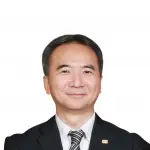
Speaker: Prof. Hironori Washizaki Waseda University, Japan
Time: July 27 (Monday)09:00-10:00 Place: Hall
Topic: Impact of IEEE Computer Society in Advancing Technologies, including SWEBOK and Service Engineering
Biography: Prof. Dr. Hironori Washizaki is a Professor and the Associate Dean of the Research Promotion Division at Waseda University in Tokyo and a Visiting Professor at the National Institute of Informatics. He also works as a Director of eXmotion, Inc. He currently serves as the IEEE Computer Society's Immediate Past President. He has led AI software engineering research and ICT professional and educational activities, including developing the IEEE-CS's Guide to the Software Engineering Body of Knowledge (SWEBOK Guide). He leads a professional IoT/AI/DX education project called SmartSE.
CISOSE Keynote Speakers
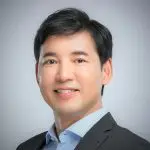
Speaker: Professor Jianwei Zhang
University of Hamburg, Germany
Time: July 27 (Monday) 10:30-11:15
Place: Hall
Topic: Multimodal Embodied AI: Toward Intelligent General-Purpose Robots for Humanity
Biography: Jianwei Zhang is Professor and Director of the Institute of Technical Aspects of Multimodal Systems (TAMS) in the Department of Informatics at the University of Hamburg, Germany. He is a member of the German Academy of Science and Engineering and an International Member of the Chinese Academy of Engineering. He received his Bachelor of Engineering (1986, with distinction) and Master of Engineering (1989) degrees in Computer Science from Tsinghua University, Beijing, China, and his PhD (1994) from the Institute of Real-Time Computer Systems and Robotics at the University of Karlsruhe, Germany. His research focuses on multimodal information processing (vision, audition, touch, and beyond), multimodal computational models, cognitive sensor fusion for robot perception, robot learning architectures, dexterous manipulation, and service robot applications. He has published more than 800 scientific papers and books and has received multiple best paper awards. Professor Zhang served as General Chair of the IEEE/RSJ International Conference on Intelligent Robots and Systems (IROS 2015) in Hamburg and has played leading roles in numerous international research initiatives and scientific organizations.
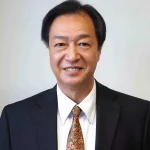
Speaker: Prof. Jianhua Ma
Hosei University, Japan
Time: July 28 (Tuesday) 09:00-09:45
Place: Hall
Topic: From Personal Big Data to Personalized Intelligence
Abstract: Personal Data is getting bigger and bigger due to the popularity of smartphones, wearables, ambient devices, IoT, social media, cloud and edge services, etc. Personal big data (PBD) is a large and continuous collection of data from various sources in rich multimode as personal lifelogs experienced in physical and cyber environments. Such PBD can be used not only for knowing more about a person but also making personalized intelligence (PI) in emerging cyber-physical integrated hyperworld. This talk will first discuss the latest research on recognition of personal behavior, emotion and personality based on increasing personal big data, and then present a novel way to create a group of artificial intelligent buddies or agents that may help a real individual (Rea-I) better living, working and doing other activities in the hyperworld. These personal intelligent buddies/agents, generally known as X-Is, can be in various forms including Cyber-I, Wear-I, Robo-I, Ambi-I, Web-I, Social-I, Health-I, and so on to serve and assist a person in different life aspects or ways. Potential emerging applications are foreseen, and key technological challenging issues are discussed on using personal big data for personalized intelligence.
Biography: Jianhua Ma is a professor in the Faculty of Computer and Information Sciences, Hosei University, Tokyo, Japan. He was the Director of Hosei University Institute of Integrated Science and Technology in 2024 FY. He served as the Chair of Digital Media Department of Hosei University in 2011-2012. His research interests include pervasive computing, social computing, wearable technology, IoT, smart things, and cyber intelligence. Ma is one of pioneers in research on Hyper World and Cyber World (CW) since 1996, and was a co-initiator of the first international symposium on Cyber World in 2002. He first proposed Ubiquitous Intelligence (UI) towards Smart World (SW), which he envisioned in 2004, and was featured in the European ID People Magazine in 2005. He has conducted several unique CW-related projects including the Cyber Individual (Cyber-I), which was featured by and highlighted on the front page of IEEE Computing Now in 2011. He has published more than 300 papers, co-authored/edited over 15 books and 30 journal special issues, and delivered over 30 keynote speeches at international conferences. He has founded three IEEE Congresses on ‘Smart World’, ‘Cybermatics’ and ‘Cyber Science and Technology’, respectively, as well as IEEE Conferences on Ubiquitous Intelligence and Computing (UIC), Pervasive Intelligence and Computing (PICom), Dependable, Autonomic and Secure Computing (DASC), Cyber Physical and Social Computing (CPSCom), Internet of Things (iThings), Digital Twin, and Metaverse. He is a Chair of IEEE SC Hyper-Intelligence Technical Committee, a Co-chair of IEEE SMC Technical Committee on Cybermatics, and a founding chair of IEEE CIS Technical Committee on Smart World.
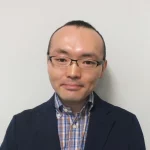
Speaker: Assoc. Prof. Yutaka Yamaguti Fukuoka Institute of Technology, Japan
Time: July 28 (Tuesday) 12:45-13:30
Place: Hall
Topic: Functional Differentiation in Brains and Neural Networks
Abstract:Functional differentiation—the emergence of distinct roles among neurons and neural populations—is a central feature of brain organization, yet its dynamical basis remains incompletely understood. In this talk, I approach this problem from complex systems theory, focusing on how global constraints on information flow can bias self-organizing neural systems toward specialization. I will introduce mathematical models developed with my colleagues—coupled-oscillator networks, evolutionary reservoir computers, hippocampal models, and recurrent neural networks trained with mutual-information constraints—linked by a common question: how does information-flow regulation shape differentiation? Across these models, specialization can arise before structural reorganization and can support adaptive properties such as noise robustness and containment of perturbation effects. I will end by briefly considering possible connections to artificial intelligence, where related questions about specialization, modularity, and robustness also arise.
Biography: Yutaka Yamaguti is an Associate Professor in the Department of Computer Science and Engineering, Faculty of Information Engineering, Fukuoka Institute of Technology, Japan. He received his Ph.D. from Hokkaido University, Japan, in 2008. His research interests include computational neuroscience, artificial neural networks, and chaotic dynamics, with a particular focus on the dynamics of recurrent neural networks and functional differentiation in neural systems. He serves on the editorial board of Cognitive Neurodynamics.
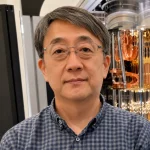
Speaker: Prof. Jianjun Zhao
Kyushu University, Japan
Time: July 29 (Wednesday) 09:00-09:45
Place: Hall
Topic: Quantum Software Engineering: From Quantum Algorithms to Real Software
Abstract: Quantum computing is often discussed in terms of hardware, algorithms, and circuits. Yet a quantum algorithm is only a starting point. To be used in practice, it must be realized as software that can be developed, tested, analyzed, debugged, and maintained. In this talk, I will introduce the emerging field of quantum software engineering, which brings software engineering principles, methods, and tools to the development and quality assurance of quantum software. I will discuss how the distinctive properties of quantum computation create new challenges for program analysis, testing, debugging, repair, modeling, and software quality, and why classical software engineering methods need to be reconsidered and adapted for the quantum setting. The talk will conclude with several open problems and future directions for making quantum software engineering a more systematic and practical field.
Biography: Jianjun Zhao is a Professor at Kyushu University, Japan, whose research connects software engineering with quantum computing. He is interested in a simple question: if quantum programs are to become real software, how can we make them easier to understand and test, and more reliable in practice? Building on his long-standing work in software engineering, he now studies quantum program analysis, testing, debugging, repair, and software quality. More broadly, his work aims to make quantum software engineering a more systematic and practical field.
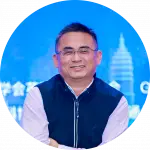
Speaker: Dr. Gordon Gu
Board Director – ADINNO Inc.
Time: July 29 (Wednesday) 11:45-12:45
Place: Hall
Topic: New Economy Based on Advanced Air Mobility & Low Altitude Driven by the New tech 6G AI / eVTOL
Commonly known as the Low-Altitude Economy in china, the AAM industry is forecast to generate more than 500,000 new jobs and contribute nearly RMB 200 billion in incremental GDP to the G60 area— an integrated cluster of nine cities surrounding Shanghai — by 2035.
Biography:
Dr. Gordon Gu is a serial entrepreneur, angel investor, and technology strategist with 30 years in tech, now a key figure in China’s Advanced Air Mobility (AAM) and low-altitude economy, such as ADINNO Inc.
Core Profile
Serial Entrepreneur & Angel Investor
- Built and exited multiple tech ventures; angel investor in dozens of startups.
- Early mover in South Africa/Liberia/Guinea telecom market.
- Partnered with mutual funds for Hong Kong stock market investments.
Current Focus: AAM & Low-Altitude Economy
- Founder of Yangtze River Delta G60 Low-Altitude Economy Innovation Alliance
- Drives 6G AI + eVTOL industry integration, ADINNO designed and offering the key Brain for this eVTOL airline’s safe & efficient operation.
- Works closely with national and local low-altitude economy authorities to shape policy and ecosystem development.
Tech Background & Expertise
- 30 years in high-tech; holds multiple invention patents.
- Proficient in IC design, computing, communications, video processing, AI.
- First local Chinese supplier of 3G CDMA/WCDMA chipsets in China’s early 3G era.
Summary
A veteran technologist, serial entrepreneur, and investor bridging semiconductors, telecom, and now AAM/low-altitude economy. As founder of the G60 Low-Altitude Alliance, he is a central figure in China’s next-generation air mobility ecosystem.
FTS Summit Keynote Speaker

Speaker: Prof. Jie Xu
University of Leeds, UK
Time: July 30 (Thursday) 09:00-10:30
Place: Hall
Topic: Systems for AI Agents: Scaling, Performance, and Execution Support
Biography: Jie Xu is Chair of Computing at the University of Leeds, Director of the UK White Rose Grid e-Science Centre, involving the three White Rose Universities of Leeds, Sheffield and York, a
co-Leader of the EPSRC-funded UK National Hub in Clouds and Distributed Computing, and
Head of the Distributed Systems and Services (DSS) Theme at Leeds. Xu has worked in the
field of Distributed Computing Systems for over forty years, engaging closely with industrial
leaders in the field. He received a PhD in Computing Science from the University of
Newcastle upon Tyne, and was Professor of Distributed Systems at the University of Durham
before joined Leeds in 2003.
Professor Xu is an executive member of UKCRC (UK Computing Research Committee) and a
Turing Fellow in AI and Data Science. He has served as an academic expert for numerous
governments and industries, such as Singapore IDA, Lenovo, UK EPSRC, UK DTI (InnovateUK),
and Research Ireland. In addition, he has extensive editorial experience, having served as an
editor for IEEE Distributed Systems from 2000 to 2005, and currently acting as an associate
editor of IEEE Transactions on Parallel and Distributed Systems and ACM Computing Surveys.
Professor Xu is currently the Steering Committee Chair of IEEE ISADS, a Steering Committee
member for several IEEE conferences, such as SRDS, ISORC, HASE, SOSE, JCC, and CISOSE, as
well as serving on the steering board of IEEE TC on BIS. He has also been a General Chair/PC
Chair for various IEEE international conferences. With over 300 academic publications,
including papers in top-ranked IEEE and ACM Transactions, Professor Xu has received
international research prizes, such as the BCS/AT&T Brendan Murphy Prize and EU HiPEAC Transfer Award 2025, and led or co-led more than 20 research projects worth over £30M. He is also the co-founder of two university spinouts specializing in data analytics and AI
software for optimizing data-centre performance, as well as in co-simulation and digital-twin
technologies. In addition, he is now the founding co-director of ACE3 AI Ltd.

Speaker: Prof. Wei-Tek Tsai
Arizona State University, USA
Time: July 30 (Thursday) 09:00-10:30
Place: Hall
Topic: Software Engineering 3.0 (SE3) : A Foundational Change
Biography: Wei-Tek Tsai has been a professor in Computer Science for over 40 years formerly at University of Minnesota and Arizona State University. His recent research areas including data assets, data networks, and Software Engineering 3.0.

Speaker: Daniel Vu
Founder & CEO, SotaTek JSC, Japan
Time: July 30 (Thursday) 10:45-13:00
Place: Hall
Topic: Empowering Organizations with AI Agents: Practical Social Implementation in Business and Education
Abstract: Many organizations face critical challenges caused by labor shortages and information overload. We believe that the next stage of artificial intelligence lies beyond AI as a mere tool and toward AI as a collaborative partner capable of autonomously accomplishing complex tasks. In this presentation, we introduce practical implementations of this vision, including NoteX, an autonomous meeting agent that significantly reduces post-meeting administrative work, and Saydi, a translation platform that accelerates collaboration among global teams. These solutions demonstrate how our global development organization of more than 1,500 engineers enables the rapid deployment of AI technologies into real-world business and educational environments.
We place particular emphasis on a Guardrail Architecture that ensures AI reliability through engineering principles, as well as the concept of Ethics by Design, in which humans remain responsible supervisors while collaborating with AI. Based on a multi-agent infrastructure that enables AI agents to cooperate autonomously, we present a roadmap toward a future of human–AI co-creation and discuss our vision of making the Autonomous Enterprise a widely adopted organizational model by 2030.
Biography: Daniel Vu (Vu Xuan Duong) is the President and CEO of SotaTek Japan Co., Ltd. He is an expert in artificial intelligence (AI), blockchain technologies, and global digital transformation (DX) strategy. He received a degree in Software Engineering from Hanoi University of Science and Technology (HUST), Vietnam, and further studied Information Engineering at Keio University, Japan. In 2015, he co-founded SotaTek JSC with seven engineers. Since assuming the role of CEO of SotaTek Japan Co., Ltd. in 2019, he has led the company's global expansion, overseeing an international organization of more than 1,500 professionals. His areas of expertise include artificial intelligence and machine learning, global digital transformation strategies, blockchain and Web3 technologies, and cloud computing. He has successfully driven business innovation by leveraging cutting-edge technologies and promoting the practical adoption of AI solutions across industries.

Speaker: Dr. Yangfan Liu
Oklahoma State University, USA
Time: July 30 (Thursday) 10:45-13:00
Place: Hall
Topic: Integrating Artificial Intelligence into Physical Acoustics: Technical Overview and Future Horizons
Abstract: While modern smart sound technologies have achieved massive success in speech, audio, and communication applications, these consumer-facing solutions largely operate without embedding a fundamental understanding of physical acoustics—leaving the application of AI to physical acoustics in an active, exploratory phase. This presentation provides an overview of this emerging landscape, introducing a structured framework that categorizes AI for physical acoustics into four distinct modes of interaction between physics knowledge and machine learning architectures. Through real-world examples, the presentation will examine the unique technical execution, key challenges, and critical engineering considerations inherent to each of these four categories. Bridging current paradigms with future horizons, the discussion will highlight how next-generation AI, specifically Large Language Models (LLMs) and advanced robotics, will transform industrial workflows and physical systems. Key frontiers explored will include context-based automated sound field synthesis (for both immersive entertainment applications and human comfort evaluation and improvement), intelligent acoustic design companions that actively optimize engineering workflows, and the integration of smart acoustic technologies onto robotic platforms for autonomous diagnostic and interaction capabilities.
Biography: Dr. Yangfan Liu is an Associate Professor in the School of Mechanical and Aerospace Engineering at Oklahoma State University, where he specializes in physical acoustics, noise control, and psychoacoustics. His research focuses on intelligent acoustics, integrating artificial intelligence with deep physical models and human perception frameworks.
Dr. Liu earned his Ph.D. from Purdue University in 2016. Following a two-year postdoctoral fellowship, he joined the Purdue University faculty as an Assistant Professor in 2018, before transitioning to Oklahoma State University as an Associate Professor in July 2026. Over his academic career, Dr. Liu has served as Principal Investigator on more than 30 research projects, securing approximately $10 million in funding from federal agencies, industry-leading corporations, and technology startups. An advocate for translational research, his innovations in smart noise and vibration control, intelligent diagnostics, and human-centric environmental comfort have been widely commercialized and integrated into top-selling products and engineering workflows worldwide.
An active leader in the international acoustics community, Dr. Liu serves as Vice President of the Institute of Noise Control Engineering (INCE) and chairs the INCE Technical Committee on Signal Processing, Active Noise Control, and Instrumentation. He also contributes to the Acoustical Society of America (ASA) through his service on the Educational Outreach, Public Policy, and International Liaison committees. His contributions to the field include invited plenary lectures, flagship magazine articles for the National Academy of Engineering, and the organization of over 20 technical sessions at major international conferences.
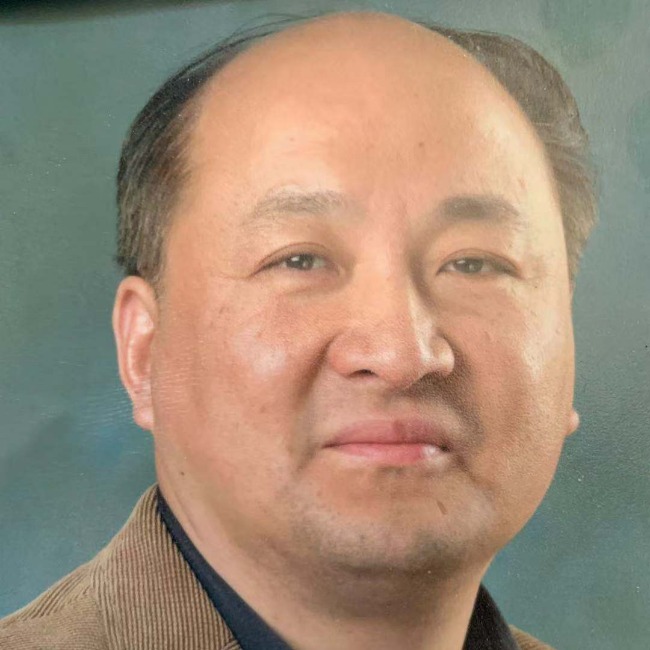
Speaker: Prof. Jerry Zeyu Gao
San Jose State University, USA
Time: July 30 (Thursday) 10:45-13:00
Place: Hall
Topic: Mobile AI Cloud – Intelligence and Platforms for Smart Autonomous Vehicles
Abstract: In this talk, Dr. Gao first presents his group’s research work on different AI could platforms for smart cities in campus surveillance, smart EV charging services, smart city traffic, and smart vehicle road services. This covers diverse intelligence requirements, and models, and mobile cloud infrastructures and components. Next, Dr. Gao is going to review and report the-state-of-art research and technologies on smart autonomous vehicles, and discusses challenges and needs. Finally, Dr. Gao will share his vision and insights on building agentic mobile AI cloud platforms for smart autonomous vehicles, including diverse intelligence and agentic infrastructures.
Biography: Jerry Zeyu Gao is a professor at the Department of Computer Engineering at San Jose State University. Now, he is the director of SJSU research center on Smart Technology, Computing, and Complex Systems. He had over 27 years of academic research and teaching experience and over 10 years of industry working and management experience on software engineering and IT development applications. He has published four technical books and over hundreds (360) publications in IEEE/ACM journals, magazines, international conferences and workshops. His Google Scholar citation is over 10K+ and his ResearchGate reads is over 390K+. His current research areas include machine learning, smart cities, AI test automation, AI clouds and mobile clouds. In 2010, Jerry Gao has been recognized by University of Texas at Arlington as a distinguished Alumna for College of Engineering at its 50th anniversary. In 2011, he was award as a KSI Fellow in SEKE2011. In 2013, Dr. Gao has received the College of Engineering Faculty Award for Excellence in scholarship, Dr. Gao served as an editorial board member and an associate editor for numerous JCR/SCI-index international journals in software engineering, machine learning, and smart cities, such as IEEE Software, Smart Cities, Energies, and Agriculture. Dr. Gao has been included and listed in Marquis American Who's Who 2020-2022. In last 10 years, Dr. Gao has played as one of leaders in organizing many international conferences and workshops as a conference co-chair, program co-chair, and workshop co-chair. Now, he is the steering board chair for IEEE CISOSE congress and IEEE Future Technology Summit, and the steering board member for IEEE Smart World Congress. Recently, He has been invited by many international conferences as a keynote speaker to address topics in Ai Test Automation, Smart Cities, UAV AI cloud, Green Energy Ai Cloud, Smart Agricultures, and Intelligent Wildfire Platforms.